



Saving the down payment is a big milestone. But before you shop for a home in Glendora, Pasadena or elsewhere in the San Gabriel Valley, leave room for the costs that come with getting the keys, too.
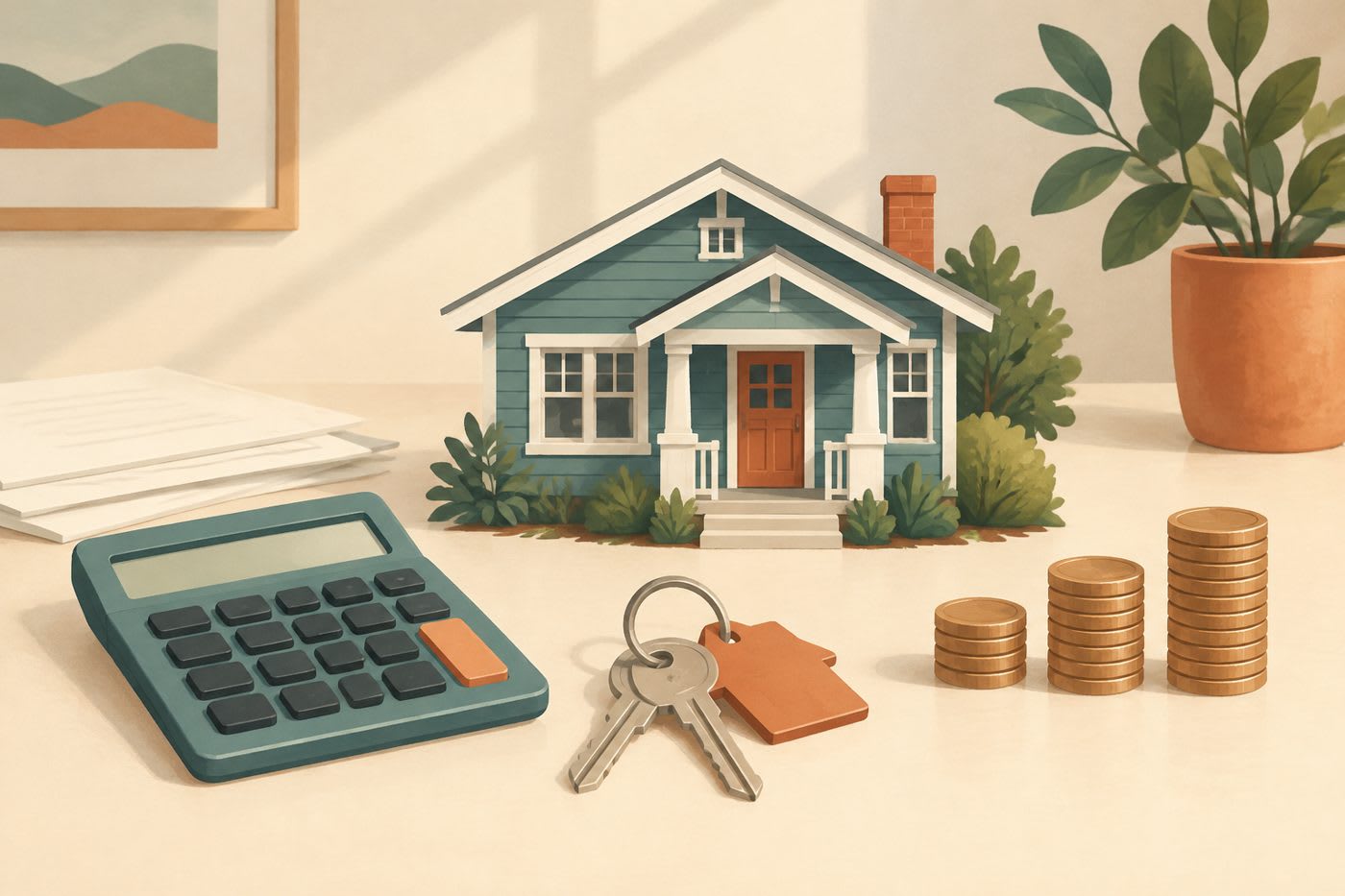
Image above: editorial illustration, not a real property.
The short answer: budget beyond the down payment
Plan for closing costs, any purchase expenses paid before closing, and money for moving and life after the move. There is no single extra amount that fits every buyer.
The Consumer Financial Protection Bureau suggests a rough starting estimate of 2% to 5% of the purchase price for closing costs, excluding the down payment. That is general guidance, not a San Gabriel Valley fee quote. Your loan, lender, property and purchase terms will shape the actual amount.
For a hypothetical $800,000 purchase, that range is $16,000 to $40,000 beyond the down payment, before considering credits or other adjustments. The price is an example, not a claim about the local median. Use the range to start planning, then replace it with an itemized estimate.
What might those costs include?
Ask your lender and escrow team to walk through the charges, who pays each one, and when it is due. Depending on the transaction, your budget may include:
Lender charges, an appraisal and any discount points you choose to pay.
Escrow or settlement services, title-related charges, recording fees and any buyer-paid broker fee under your agreement.
Prepaid interest, homeowners insurance and any initial deposit into the lender's tax-and-insurance escrow account.
Home inspections and other due-diligence costs, some of which may be due before closing.
Some items are service fees; others pay expenses in advance or fund an account for future bills. Ask what is already included in the estimate so you do not add the same cost twice.
Is the earnest money deposit extra?
No. Of course the details depend on your contract, but here in our area the earnest money deposit is the deposit that opens escrow. It is not an additional cost on top of everything else. It is all credited toward your down payment and closing costs.
You still need to have it ready when the contract says it is due. And whether you can get it back if the purchase falls through depends on the contract and the circumstances, so review those terms before you commit.
In today's market, you may be able to ask for help with closing costs
In some situations, a buyer can ask the seller to pay part of the closing costs, often called a seller credit. If the seller agrees, you may not need to save quite as much cash to get to the closing table.
This is something to ask about, not something to count on. The Consumer Financial Protection Bureau notes that whether a seller is willing depends on your local market, and that a seller may ask for a higher price to cover the credit. Your loan type also limits how much of a seller credit is allowed. For example, Fannie Mae-backed conventional loans cap it at a percentage of the home's value, and the cap depends on your down payment and how you will use the home.
A credit lowers the cash you bring to closing. It does not remove the need for a down payment, and it does not guarantee loan approval. Before you write an offer, ask your lender how much seller help your loan allows, and ask me whether it makes sense for the home you want.
Look for "cash to close," not only "closing costs"
Your Loan Estimate shows estimated cash to close: the amount you expect to bring at closing after accounting for the down payment, closing costs, deposits already paid, seller credits and other adjustments. Compare it with the cash-to-close figure on your Closing Disclosure, and ask about any differences.
Keep a separate list of anything you have already paid, such as an inspection, so your total purchase budget includes it without counting it again as money still due.
Keep some money on your side of the door
Moving, utility setup, a repair or an appliance replacement can arrive quickly after the keys do. Set aside money for those needs and an emergency cushion rather than treating every dollar in savings as available for closing.
Before making an offer, I would put three questions on the table: What have you already paid? What will you still owe to close? And what will you have left afterward?
If you are planning a move in the San Gabriel Valley, I can help you organize the purchase-side questions and coordinate with your lender and escrow team for estimates specific to the home and your loan.
Erika Baños-Soria
Broker Associate, Coldwell Banker Envision
DRE #01809655
erikabanos.com
Sources
CFPB: Down payment and closing-cost planning
Fannie Mae: Purchase costs and earnest money
CFPB: Loan Estimate explainer
CFPB: Learn about loan costs and seller credits
Fannie Mae: Seller contribution limits
CFPB: Closing Disclosure explainer
General information, not a loan quote or financial, tax or legal advice. Costs and payment responsibilities depend on the property, loan and agreements. Sources checked October 29, 2026.