


If you own a condo in the San Gabriel Valley, or you are thinking about buying one, there is a California law worth knowing: SB 326, the balcony inspection law. It started as a safety measure, and as of this year it shows up right in the middle of a condo sale. Here is what it means for you, whether you are buying or selling.
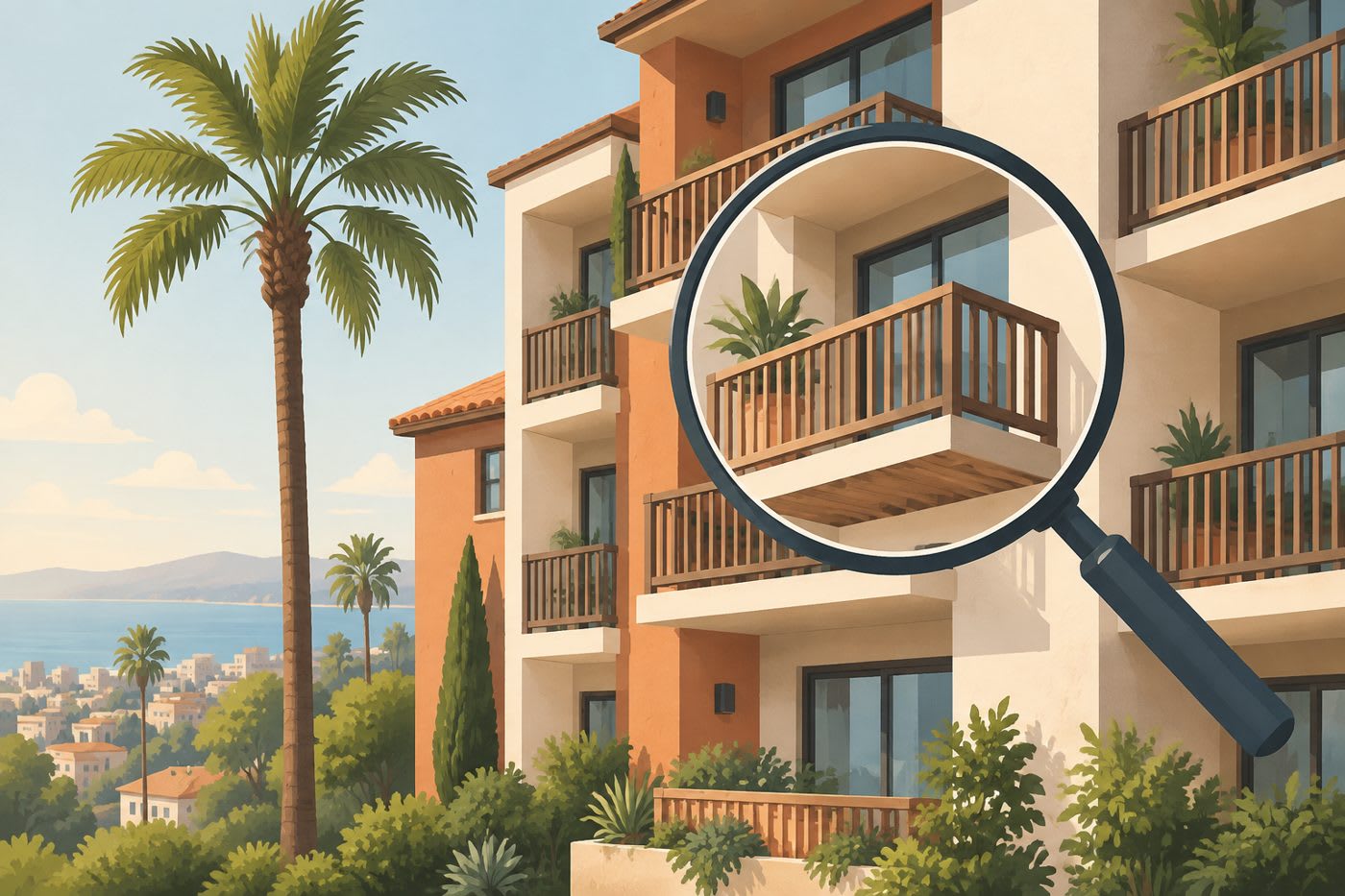
Image above: editorial illustration, not a real property.
The short version
SB 326 requires most California condo HOAs to have their elevated balconies, decks, stairways and walkways professionally inspected for safety.
The first inspections were due by January 1, 2025, so the deadline has already passed. HOAs that have not inspected may be out of compliance.
New for 2026: when a condo sells, the seller must give the buyer a copy of the HOA's most recent inspection report with the standard HOA documents.
Buyers: treat that report as part of your due diligence. Sellers: know your HOA's status before you list.
What SB 326 actually is
California passed SB 326 in 2019, after a deadly balcony collapse in Berkeley showed how hidden water damage can quietly rot the wood structure holding a balcony up. The law is now part of the California Civil Code (Section 5551), and it applies to condominium projects in common interest developments with three or more attached units.
Under the law, the HOA must have a licensed structural or civil engineer, or an architect, visually inspect a statistically significant sample of the building's "exterior elevated elements" at least once every nine years. Those are the load-bearing parts of balconies, decks, stairways, walkways and railings that are more than six feet above ground, supported in whole or in substantial part by wood, and that the association is responsible for maintaining. The inspector's written report goes to the HOA board and becomes part of the association's reserve study, so future repair costs are planned for instead of surprising everyone.
The first round of inspections had to be completed by January 1, 2025. That deadline has passed, which means an HOA that has not done its inspection is likely out of compliance right now, and many are still catching up.
What changed in 2026
A follow-up law, SB 410, took effect on January 1, 2026, and it matters directly for buyers and sellers. The biggest change: when a condo sells, the seller's HOA document package must now include a copy of the most recent SB 326 inspection report. In practical terms, buyers will see the balcony report in escrow, and sellers should expect questions about it.
SB 410 also requires the inspection report itself to state how many units in the project have elevated elements, how many elevated elements exist, and how many were actually inspected, along with a certification that a proper sample was reviewed. And it clarified that the law covers buildings with three or more attached units, so a community of detached condos is generally not covered.
If you are buying a condo, ask these
Has the HOA completed its SB 326 inspection? Ask for a copy of the report. It should be in the HOA documents you receive in escrow.
What did the inspection find? Look for recommended repairs, and whether they are completed, in progress, or still pending.
Are there any current or planned special assessments for balcony or structural work? Repair projects are often funded this way, and the cost lands with owners.
What does the latest reserve study say? The inspection report feeds into it, so it shows whether the HOA is budgeting for the work.
How could this affect financing? Lenders often ask about the inspection and about deferred maintenance when they review a condo project, so unanswered questions can slow or complicate a loan. Better to know early.
If you are selling a condo, do these before you list
Ask your HOA or management company whether the SB 326 inspection is done, and get a copy of the most recent report. Buyers now receive it as part of the standard documents, so you want to read it before they do.
Know what the report says. If repairs are pending or a special assessment is being discussed, be ready to talk about it openly. Surprises in escrow are what kill deals.
If your HOA has not inspected yet, raise it with the board now. A project that is out of compliance can raise questions from buyers and their lenders at exactly the wrong moment.
A few things SB 326 is not
It is not about single-family homes. It applies to condo projects in common interest developments.
It does not cover every building. It applies to buildings with three or more attached units, and only to elevated elements more than six feet above ground, supported by wood, that the HOA maintains. Detached condos and non-wood structures are generally out of scope.
It is not the individual owner's job. Compliance is the HOA's responsibility, though owners share the cost through dues or assessments.
It is not the same as SB 721. That is the similar balcony law for apartment buildings, which landlords must follow on a different schedule.
The bottom line
SB 326 is about catching hidden damage before a balcony fails, and in 2026 it is also part of how condos change hands. For buyers, the inspection report is a new and genuinely useful window into how well a building is cared for. For sellers, knowing your HOA's status before you list can save you a mid-escrow scramble.
Thinking about buying or selling a condo in the San Gabriel Valley and not sure where a particular building stands? Reach out. I am happy to help you read the report and ask the right questions.
This article is general information, not legal advice. Whether a specific building is covered, and what its HOA must do, depends on the property and its governing documents.
Erika Baños-Soria | Broker Associate, Coldwell Banker Envision | DRE #01809655
erikabanos.com
Sources
California Civil Code Section 5551 (current text)
SB 326 (2019), the original balcony inspection law
SB 410 (2025), effective January 1, 2026 - disclosure and report updates
AB 2114 (2024) - civil engineers added as qualified inspectors
Los Angeles County Fire, Exterior Elevated Elements FAQ
Civil Code Section 5551 · SB 326 bill text · SB 410 bill text · AB 2114 bill text · EEE inspection FAQ