


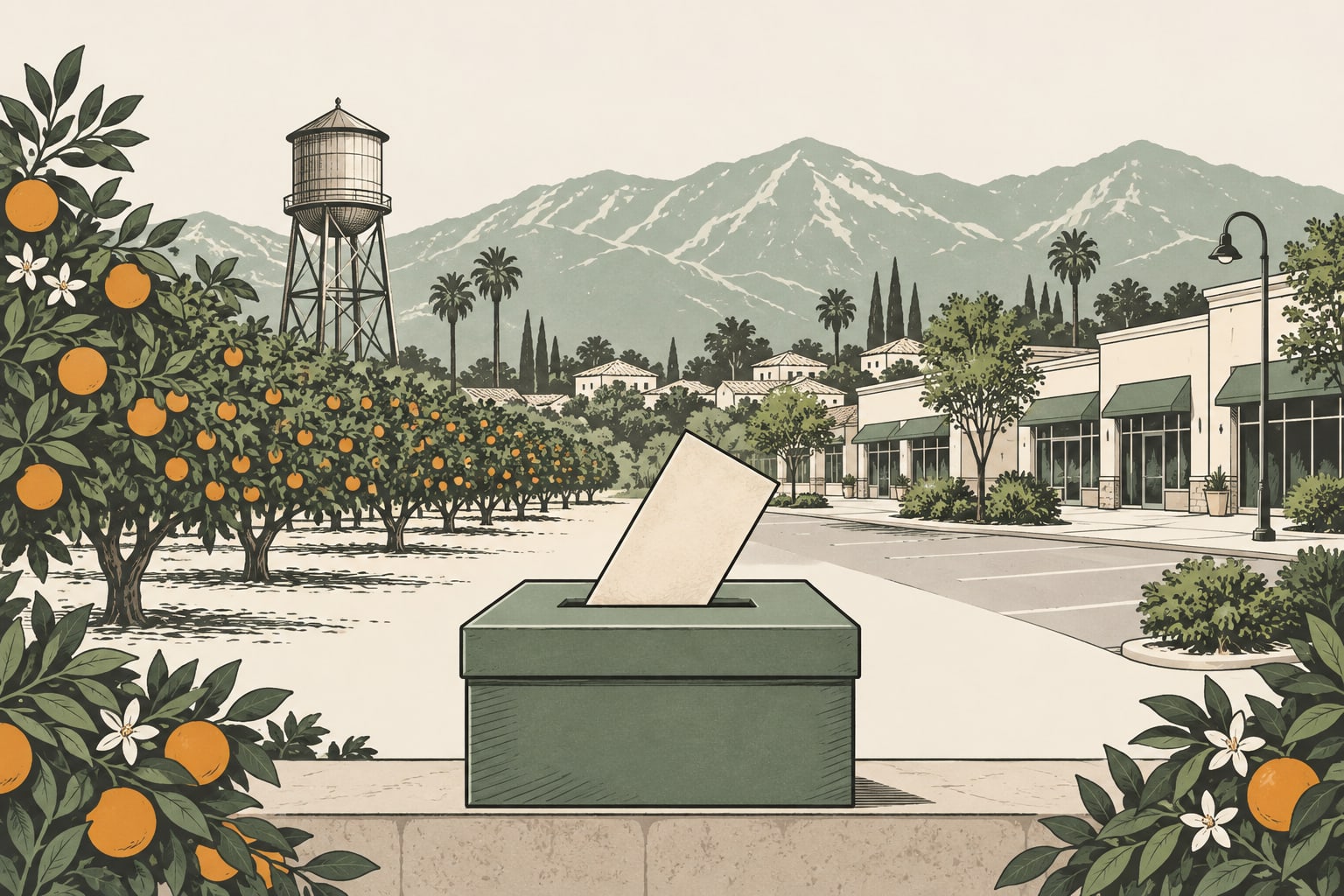

Illustration, not a real property.
It's Election Day. Most of the attention goes to the big races, but some of the decisions that shape our neighborhoods the most happen right here at home. Glendora has a great example, and you've probably shopped at the result. Glendora Marketplace, at Lone Hill Avenue and Gladstone Street, exists because local voters said yes to it.
From groves to a growing town
Glendora was founded in 1887 by George Whitcomb, who combined "Glen," for the narrow valley of his property, with part of his wife Leadora's name. For decades, citrus groves defined the town. After World War II, many of those groves gave way to subdivisions and new neighborhoods, and the Pride of the Foothills grew into the community we know today.
A question too big for the council
By the late 1990s, a major retail project was proposed for about 50 acres at Lone Hill Avenue and Gladstone Street, and the developers and Home Depot purchased the site in 1998. The idea split the community. Supporters wanted Glendora's sales tax dollars to stay in Glendora instead of going to neighboring cities. Opponents worried about traffic, noise, and lights, and some hoped the land would become a golf course or a park instead.
The City Council was evenly divided, and with one of the five members stepping aside because of a conflict of interest, the decision went to the people. In March 2000, Measure D asked Glendora voters to approve a new zoning and development master plan for the property.
What the yes vote built
Voters approved Measure D, and the plan moved forward. Home Depot opened first, in May 2001. Sam's Club and a first wave of restaurants followed, creating hundreds of local jobs. A few years later, in 2007, the adjoining 30-acre Diamond Ridge center added more stores, restaurants, and a movie theater.
The developers also made concessions to address neighbors' concerns. Delivery trucks, for example, were routed along Lone Hill Avenue, through the commercial area and away from homes. The debate was one of the most heated in the city's history and stayed in local politics for years afterward. But whether you love the convenience or still wonder about what might have been, the Marketplace is now simply part of how Glendora lives and shops.
Why this story matters on Election Day
Local ballots rarely make headlines, but they shape the places we live for decades. One measure in March 2000 decided what 50 acres in our town would become, and more than twenty-five years later we still walk through the result every week.
So as ballots are cast today, it's worth remembering: the closest votes to home can be the ones you see and use every single day. Happy Election Day, Glendora.
Erika Baños-Soria | Broker Associate, Coldwell Banker Envision | DRE #01809655
Sources
City of Glendora: Community Archive and History - confirms the March 2000 Measure D vote and the 50-acre Marketplace plan.
Los Angeles Business Journal (June 2002) - the split council, the community debate, opening timeline, and truck-routing concessions.
California Secretary of State: 2000 city election report - records Glendora's Measure D as passed, classified as land use and zoning.